

How to choose an EV charging station: AC or DC?

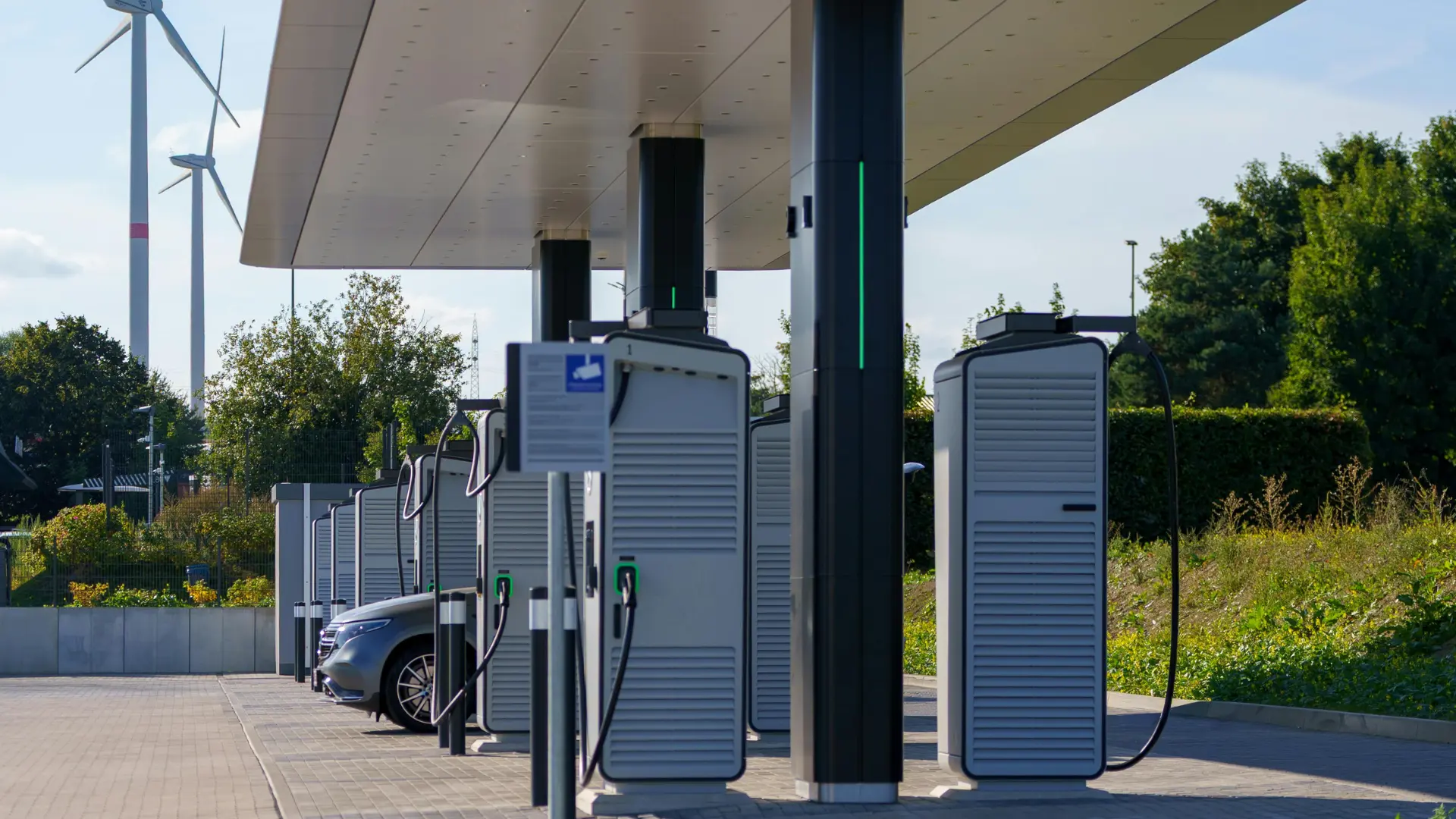
AC or DC - start here
The most important decision is the station type. AC works where drivers have time, while DC is for fast turnover. They differ in investment cost, power requirements, and typical user profile.
If you are choosing a charger for a hotel, business, residential community, car park, or multi-site network, the decision is not only about hardware. Payments, charging station management software, user billing, reporting, and future scalability matter just as much.
| Criteria | AC | DC |
|---|---|---|
| Length of stay | ||
| Locations | Offices, hotels, residential | Highways, malls, service areas |
| Investment cost | ||
| Power required | ||
| Potential turnover |
When to choose AC vs DC - quick guide
- AC: when customers stay longer and do not need fast charging.
- AC: when grid capacity is limited or budget is low.
- DC: when the location drives transit traffic and time matters.
- DC: when you want revenue from high session volume.
- DC: when you have enough power and space for infrastructure.
5 key criteria for station selection
- Traffic and dwell time - estimate how long drivers actually stay.
- Grid capacity - without it, DC is rarely viable.
- Billing model - can you deploy payments and settlements easily.
- Service costs - parts availability and service response time.
- Scalability - can the site expand with more points later.
Connectors and plug types - what drivers need
The station type is not everything - the connector has to match the vehicles that actually charge at your site. In Europe two connectors have become the standard, while a third is gradually phasing out.
| Connector | Current | Use |
|---|---|---|
| Type 2 (Mennekes) | AC | EU standard for AC charging - hotels, offices, housing, parking. |
| CCS2 (Combo 2) | DC | Standard for DC fast charging - routes, service areas, malls. |
| CHAdeMO | DC | Older standard (mainly Nissan) - declining share, worth it only for a specific fleet. |
In practice: an AC station with a Type 2 socket serves the vast majority of cars at a long-dwell location, and a DC station should have at least CCS2. Add CHAdeMO only when you actually serve vehicles that require it.
How many ports and how to plan expansion
The number of bays is a separate decision from the station type. Too few ports means queues and lost sessions; too many means frozen capital and unused grid capacity.
- Start from real demand - count how many cars use the location at peak, not how many theoretically could.
- Leave headroom on the connection - size the power so that adding another point does not require a new grid connection.
- Use load balancing - charging power management lets you serve more bays on the same connection by splitting power dynamically.
- Think modular - choose stations and sites you can expand with more ports without replacing the whole infrastructure.
A well-planned expansion is cheaper than a fix after the fact, so decide the number of ports together with the billing model and the operator system.
Costs and profits - simplified AC vs DC comparison
| Item | AC | DC |
|---|---|---|
| CAPEX | ||
| OPEX | ||
| Avg. margin per session | ||
| Payback speed | ||
| Location sensitivity |
Payment terminal or not - and alternatives
A terminal increases conversion by reducing friction for drivers without an app. On the other hand, it adds cost and service obligations.
Alternatives:
- in‑app payments,
- RFID with consolidated billing,
- QR code with online payment,
- BLIK or instant transfer.
In practice, a hybrid model works best: terminals in transit locations, app and QR in sites with repeat customers. Compare terminal cost against revenue lost when drivers have no payment option.
Kiosk terminal for multiple stations
If you have several points in one location, consider a kiosk with a single terminal serving multiple stations. You gain:
- lower cost per bay,
- centralized payment handling,
- easier servicing.
The downside is dependence on one device and the need for clear bay labeling.
Station with display or without
A display improves usability and trust, but adds cost and more service‑sensitive parts. An alternative is app or QR‑based operation.
For security, use rotating QR codes that change periodically to reduce the risk of code tampering.
Local vs international manufacturers - pros and cons
Local
- pros: faster service, easier communication, shorter supply chain,
- cons: smaller scale, sometimes fewer advanced features.
International
- pros: mature technology, broad compatibility, wider model range,
- cons: longer service times, harder parts availability.
Base the decision on warranty, SLA, and vendor experience with similar rollouts.
Additional criteria often overlooked
- OCPP compliance and easy integration with the operator system,
- anti‑tamper protections and station monitoring,
- enclosure quality and weather resistance,
- spare parts availability and predictable service costs,
- ability to expand power or add connectors later.
Which station for which location type
Instead of starting from power, start from who charges at a given place and for how long. Below is a practical mapping - a starting point, not a rigid rule.
| Location | Type | Suggested power |
|---|---|---|
| Hotel / guesthouse | AC | 11-22 kW (overnight stay) |
| Office / company | AC | 11-22 kW (parking during work hours) |
| Housing community | AC | 3.7-11 kW (overnight, load balancing) |
| Shopping mall | AC + DC | AC 22 kW + DC 60-120 kW |
| Route / service area | DC | 120-350 kW (fast turnover) |
Most common mistakes when choosing a station
- Over-sizing the power - DC without an adequate connection and turnover will not pay off in a reasonable time.
- Skipping payments and billing - capable hardware without convenient payment means lost sessions.
- No OCPP compliance - it blocks switching operators and integrations and creates vendor lock-in.
- Ignoring service and parts - a cheap station without support can generate long downtime.
- No expansion plan - adding points without power headroom ends in a costly connection upgrade.
Summary
Choosing a charging station is not only a hardware decision, but also a business‑model and customer‑experience decision. Start with location profile and real demand, then select station type, payments, and vendor. This usually shortens payback and avoids costly changes after launch.
FAQ
Is AC or DC charging better for a business location?+
AC is usually better where drivers stay longer, such as hotels, offices, residential communities, and workplace car parks. DC is better for transit locations, retail sites, and places where fast turnover matters.
What matters besides charger power?+
Power is only one part of the decision. The operator should also check grid capacity, payment options, OCPP compatibility, billing, reporting, service response, and future scalability.
Can EV24® help manage both AC and DC stations?+
Yes. EV24 can support AC and DC charging operations through station monitoring, tariffs, authorization, payments, invoices, and reporting.