

EV driver app and charging without registration: what really helps the driver?

Every charging network has an app
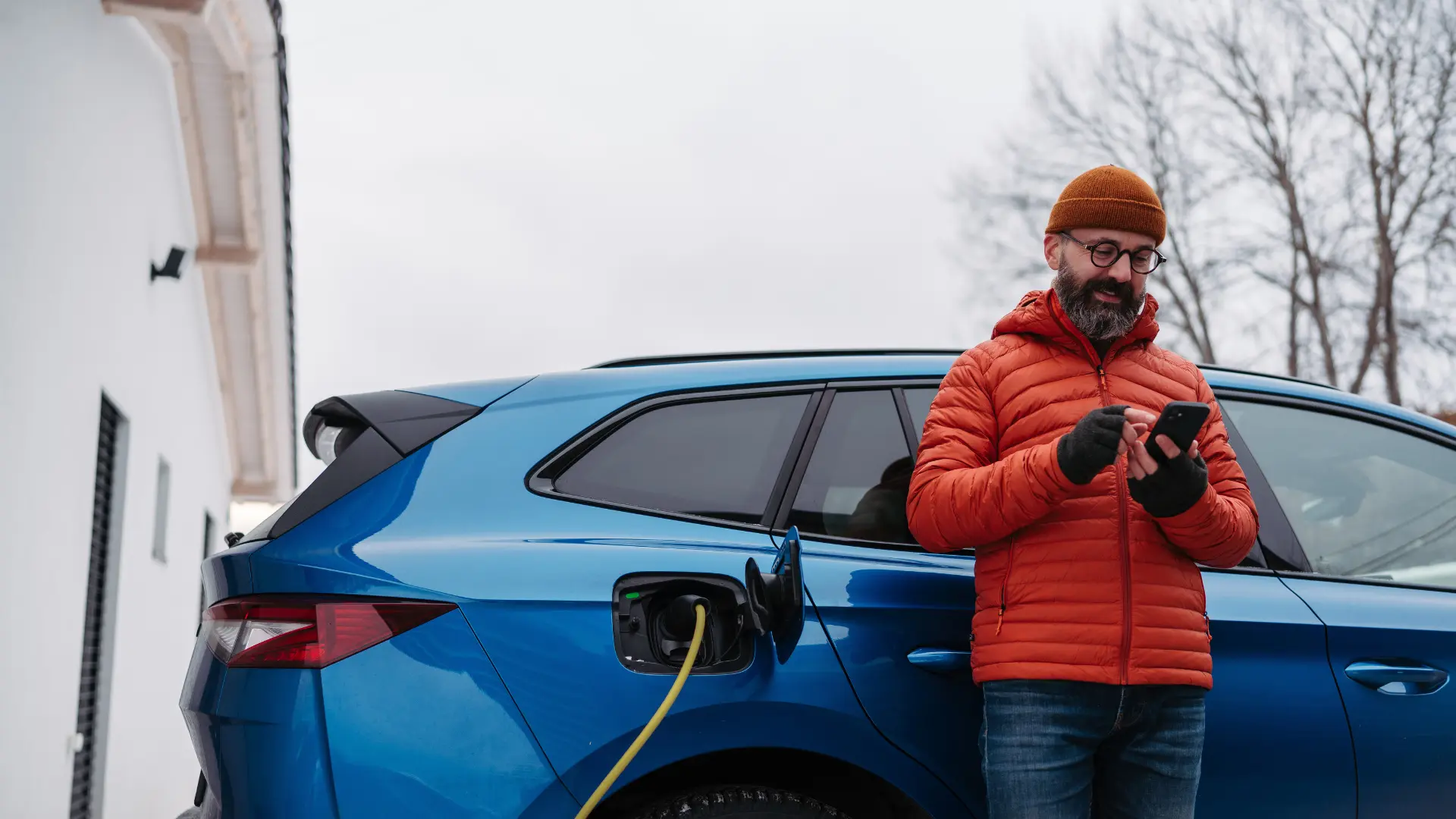
That has become a common assumption in the EV market: every driver needs an app to charge a car. But when you look at real journeys, especially cross-network charging, the problem becomes obvious. Drivers do not want another account, another password, and another registration flow at the exact moment they simply want to start charging.
The real question is no longer whether an EV driver should have an app. The real question is whether charging and payment can start faster, with fewer steps, and without forcing the user into registration every time they meet a new operator.
What does an EV driver actually expect?
Drivers are not looking for another mobile ecosystem. They are looking for a tool that helps only where it adds value. In practice, that usually means:
- fast start of the charging session,
- simple payment for EV charging,
- clear information about price or session limit,
- an easy session progress view,
- quick access to an invoice or payment confirmation,
- a consistent experience across charging locations.
If an EV driver app does not shorten the process, it becomes friction instead of help.
What did charge point operators add to the market?
Roaming was introduced to let drivers use one app across multiple charging networks. In theory it sounds convenient. In practice it adds intermediaries, commissions, integration costs, and often higher charging prices.
Instead of solving the core problem, roaming often adds another layer between the driver and the charging station. That is why many drivers still ask a simple question: why is paying for charging often harder than paying for anything else on the road?
What does AFIR change?
The AFIR regulation requires ad-hoc payment at charging stations above a defined power threshold. This matters because it makes charging possible without downloading an app or creating a long-term account.
AFIR does not strictly require a payment terminal. Ad-hoc payment can also mean redirecting the driver to a web payment flow that is fast, clear, and available immediately on the phone.
For drivers, this is critical. Charging should not depend on whether they already belong to the right app ecosystem. It should depend on whether they can identify the station, pay, and start the session without friction.
Payment terminals are not the only answer
As a result of AFIR, many DC charging stations are adding payment terminals. In some cases, operators also use the terminal for station selection, invoices, or session control. That often recreates the same issue in another form: too many steps, too much complexity, too much waiting.
There is also a cost side. Terminals increase hardware and integration costs, which can later affect the economics of the charging service itself.
So what is the alternative?
Now imagine a charging station that does not require app installation, does not force registration, and does not need a costly terminal for every scenario. That is exactly the kind of experience many EV drivers expect.
This model removes the main points of friction:
- no need to install another app on the spot,
- fewer roaming dependencies,
- lower hardware complexity,
- fewer actions before payment and charging start.
That is where models such as scan and pay become especially practical.
When does the driver app help and when does it get in the way?
A driver app can be genuinely useful for frequent users who want charging history, saved billing details, favourite locations, or a faster repeat experience in one network.
But for occasional charging, especially during travel, every extra step reduces the chance of a successful session:
- installing the app at the station,
- creating an account under time pressure,
- setting up payment methods before charging starts,
- learning a new flow for every operator.
That is why a hybrid model works best: an app for users who want more functionality, and a no-registration path for users who just want to charge and go.
What does the charging flow look like?
The process can be simple enough to understand in a few seconds:
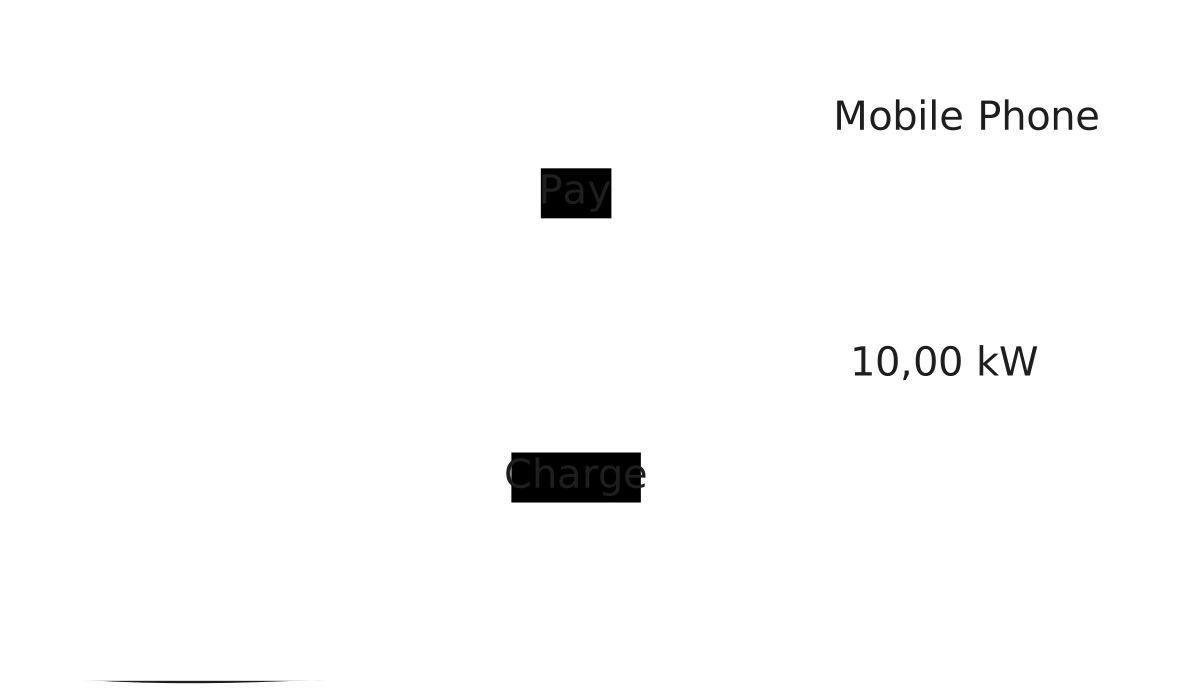
A scan and pay flow for EV charging without app download and without registration.
From the driver perspective, this is one of the most important parts of the entire charging experience. If payment is intuitive, trust grows. If payment is slow or confusing, frustration starts before the first kilowatt-hour is delivered.
Interface variants: charging with a limit and without a limit
Charging with a limit and without a limit
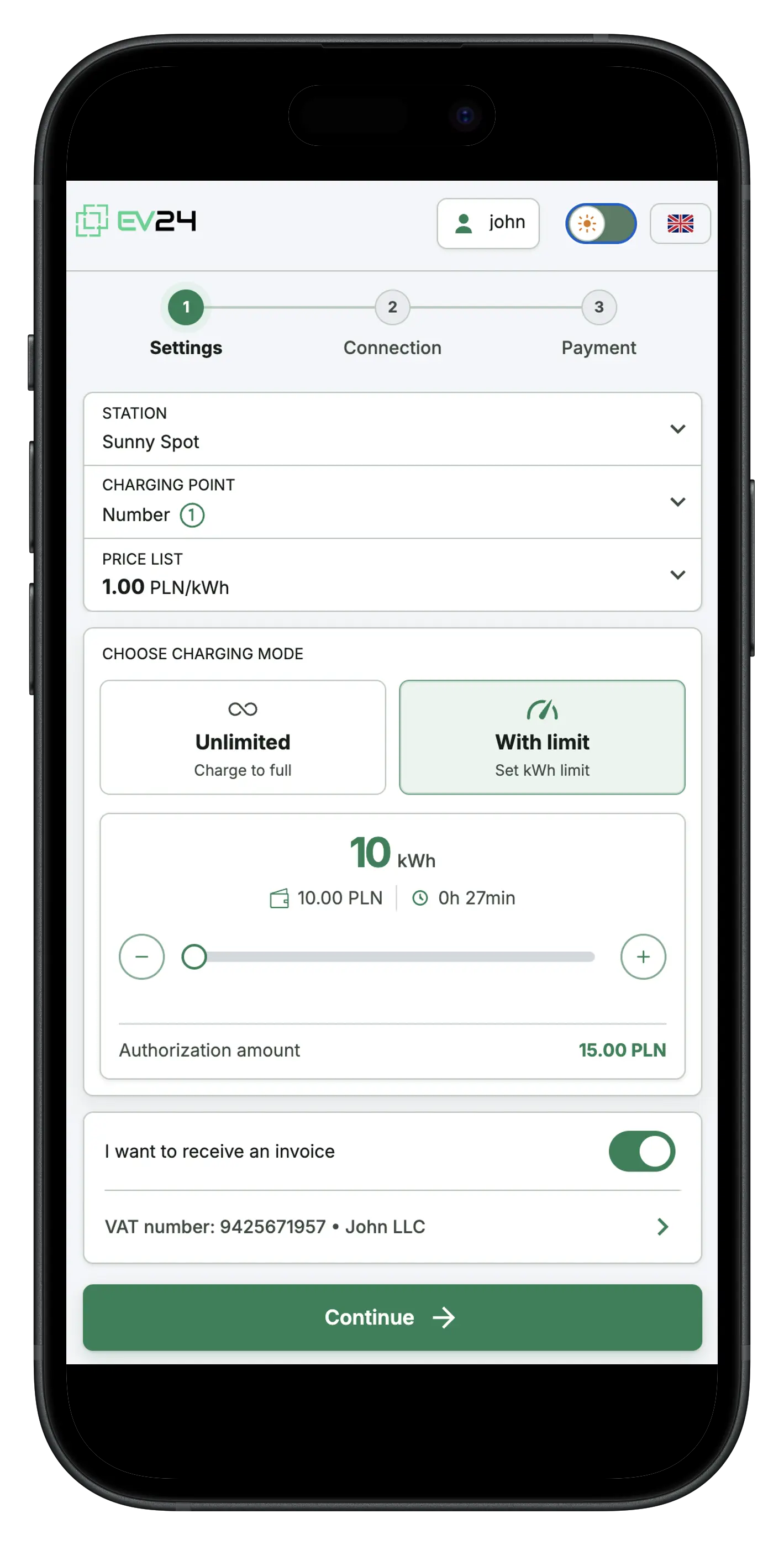
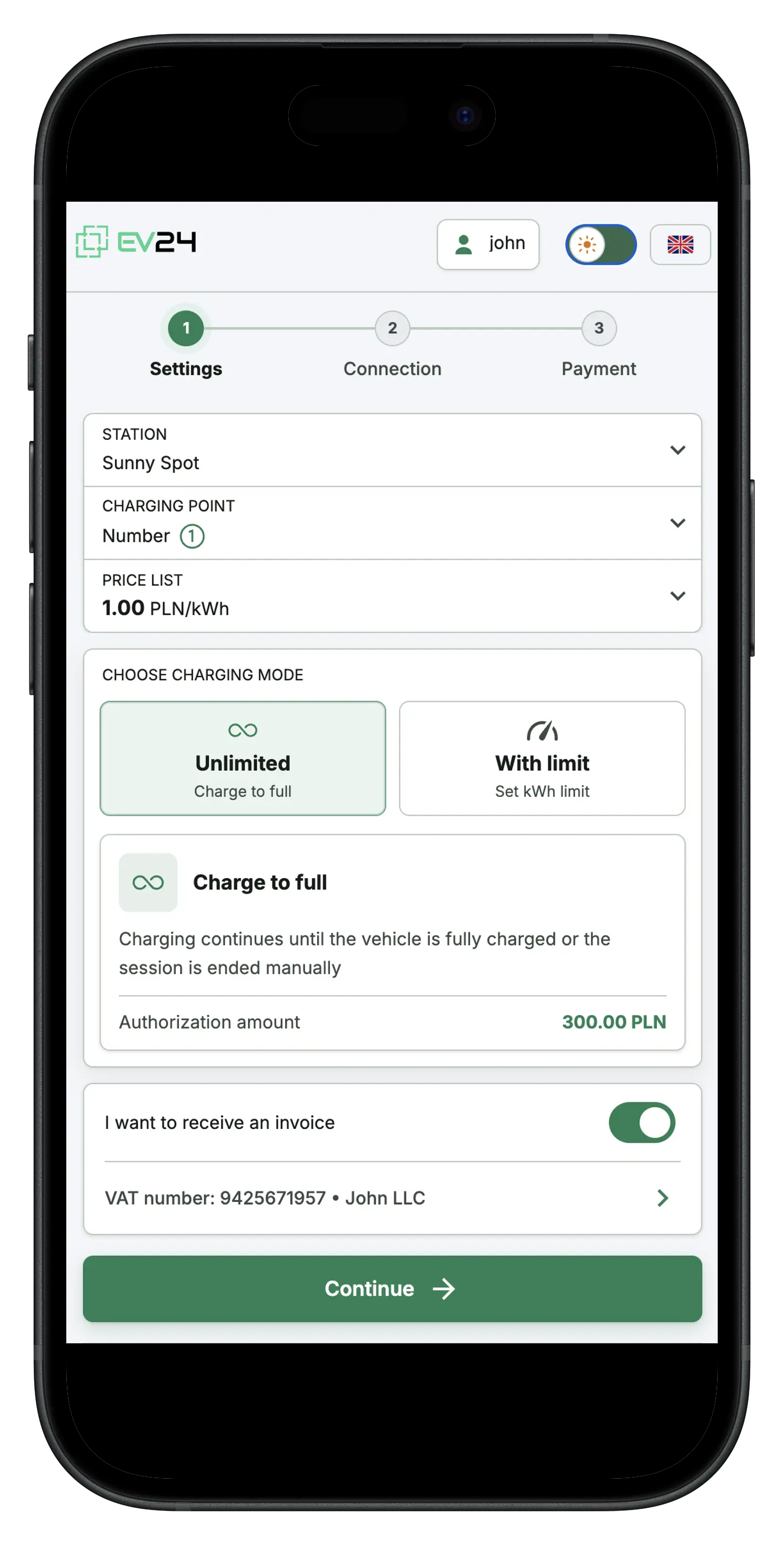
The limited model is useful when the driver wants strict cost control before the session begins. The unlimited model is better when speed and convenience matter more than pre-setting a value.
Charging in day mode and night mode
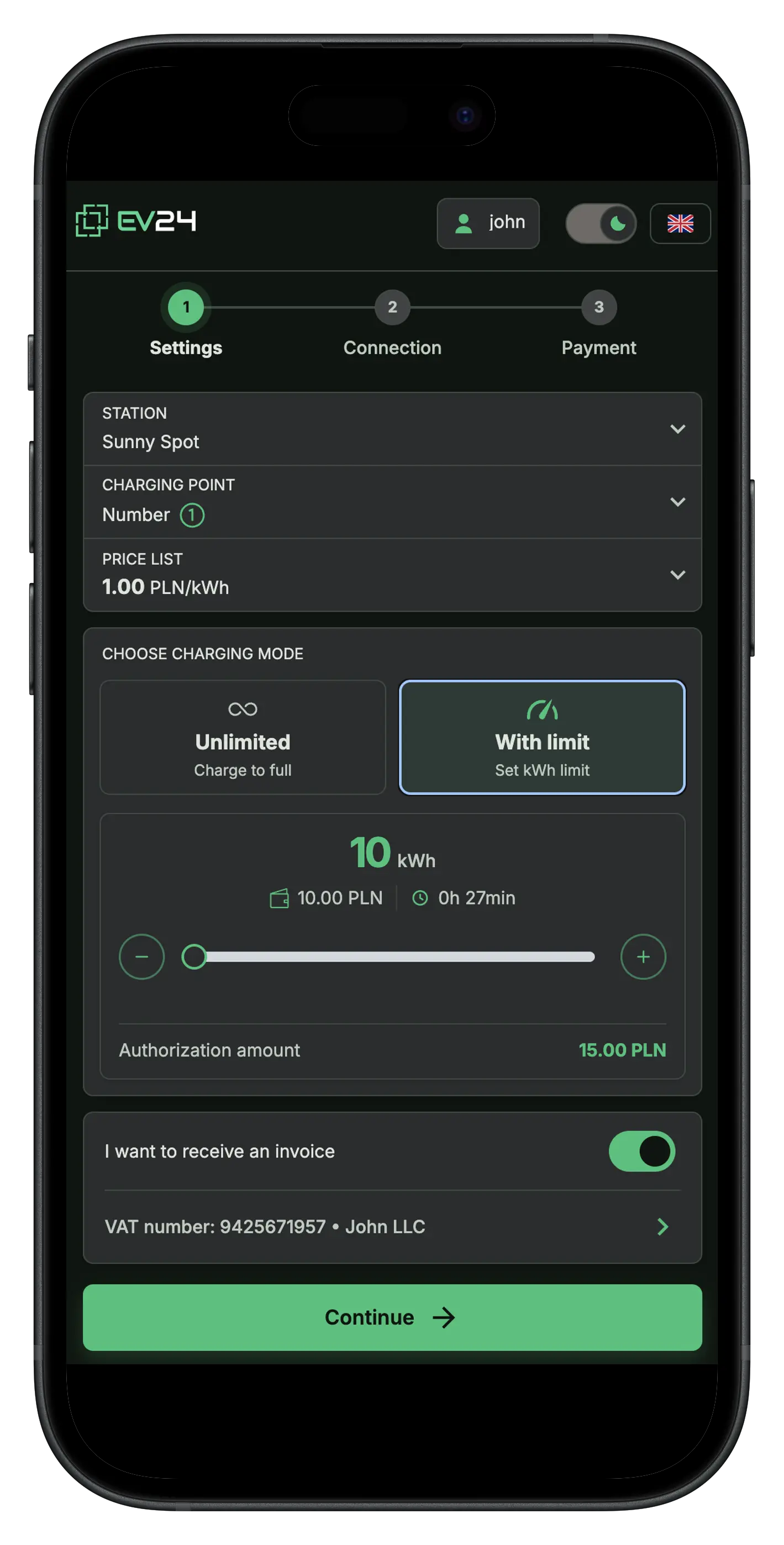
Readable UI in different lighting conditions is not a cosmetic detail. Drivers often interact with a phone while standing at the charger, outdoors, in poor weather, or after dark. A well-designed EV charging interface reduces cognitive load and helps users act with confidence.
Station identification
The station can be identified in several ways:
- scan a QR code displayed on the charger,
- scan a QR code from a sticker with a secure EV24 scanner,
- choose the nearest station from the available location list.
Choosing energy amount and payment method
Available payment methods may include:
- Apple Pay,
- Google Pay,
- payment card,
- local methods such as BLIK or TWINT,
- payment terminal where available.
Charging starts
After payment authorization, charging starts automatically.
If the driver wants an invoice, billing data only needs to be entered once. Future sessions can be faster and require fewer actions.
How to choose an EV charging app
If you compare different charging solutions as a driver, focus less on feature volume and more on whether the app actually shortens the path to charging.
A good EV driver app should answer a few simple questions:
- can charging start without registration,
- is the payment flow fast and clear,
- does the interface work well on a phone at the station,
- can the user easily obtain an invoice or payment confirmation,
- is the process understandable for a first-time user.
Summary
A modern EV driver app should not be a mandatory barrier to charging. It should be an optional layer that improves the experience for recurring users while preserving a simple no-registration path for everyone else.
That is why the best solutions combine ad-hoc payment, charging without registration, mobile-friendly scan and pay flows, and an interface that stays clear in real charging conditions.
FAQ
Do you always need an app to charge an electric car?+
No. More and more charging services support ad hoc payment and scan and pay flows that do not require downloading an app or creating an account.
How does EV charging without registration work?+
Usually the driver scans a QR code, selects a payment method, optionally sets a session limit, and starts charging without creating an account.
Which is better: charging with a limit or without a limit?+
It depends on the situation. A limit gives more cost control. No limit makes the process faster and simpler.
What features matter most in an EV driver app?+
The most important features are fast charging start, simple payment, clear price information, readable UI, invoice access, and good usability in both day and night conditions.