
How to manage an EV charging network across multiple locations

One charger is hardware. A network is an operation
One charging station can still be handled manually. With several locations, problems appear quickly: different tariffs, failures, payments, invoices, complaints, connector statuses, and reports for site owners.
Companies scaling EV charging need more than chargers. They need charging station management software that keeps each new site from adding manual work.
The EV24® documentation on charger configuration is a useful starting point. It covers OCPP, tariffs, authorization methods, address, QR code, and country requirements.
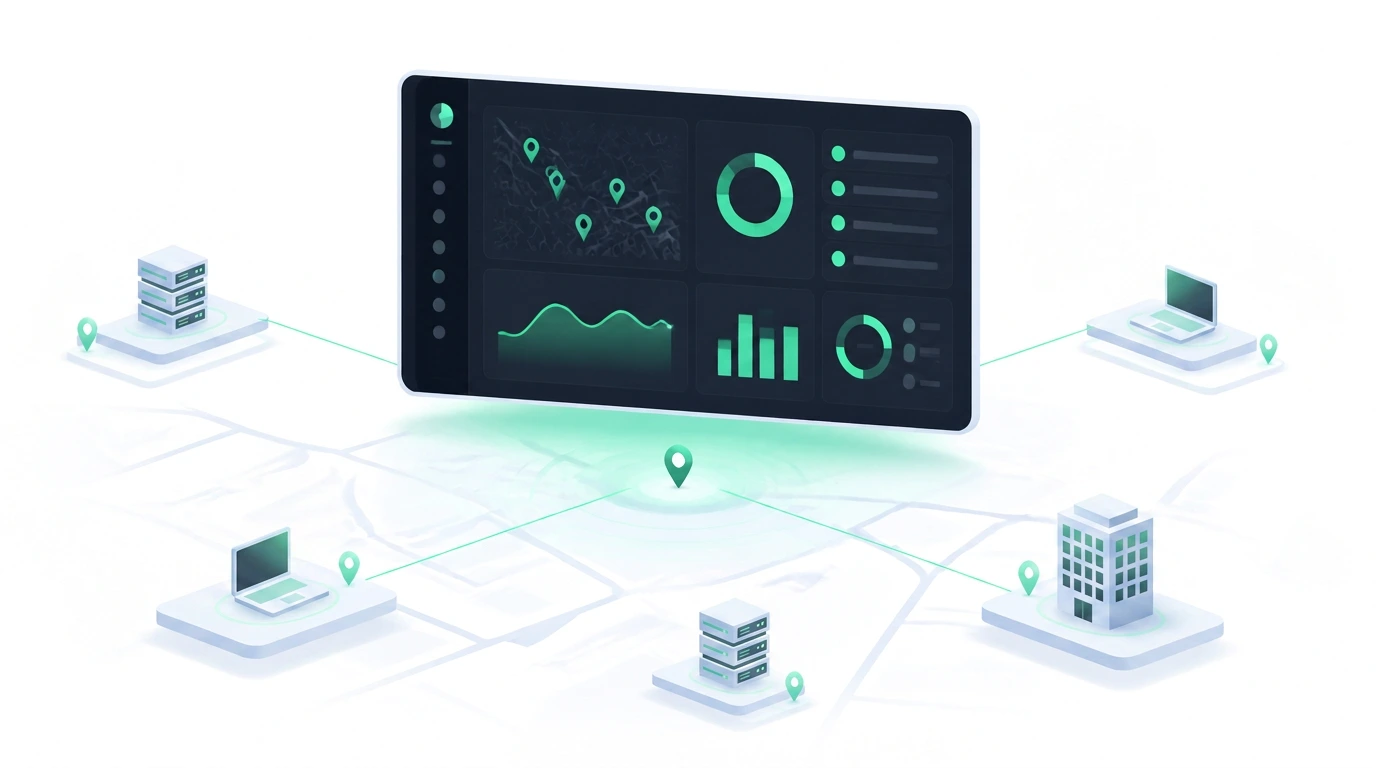
What a CPO system must handle
A CPO system should control locations, chargers, connectors, statuses, tariffs, sessions, payments, users, accounting documents, reports, and compliance.
Without this layer, the operator does not know which stations work, which generate revenue, where errors appear, and which locations need intervention.
It is clearest as a side-by-side: the same task done manually versus in a CPO system.
| Area | Manual (sheets, phone calls) | CPO system |
|---|---|---|
| Station fault | You find out when a driver calls | Automatic alert before a user reports it |
| Tariff change | Separately on each station | Centrally, per location or group |
| Settlements | Manual reports and invoices | Automatic documents and export |
| Adding a location | Another batch of manual work | Same process, no rise in workload |
| Expansion decisions | By gut feeling | Based on utilization data |
Monitoring and reaction to problems
Every outage means lost revenue and worse driver experience. With many locations, an operator cannot rely only on user phone calls. The system should show online status, connector availability, active sessions, errors, timing, and remote actions.
For public stations, monitoring also affects published data. UDT describes the EIPA registry of alternative fuels infrastructure, including charge point availability, prices, and payment methods.
Tariffs and access models
A network rarely has one tariff. A hotel, office car park, route location, and fleet depot all work differently. A good system should support kWh pricing, time fees, start fees, idle fees, private access, and different conditions for business or fleet users.
Payments and invoicing
Manual payments, refunds, invoices, and reports make scaling expensive. EV24 connects payments and settlements with the charging process, including payment terminals, online payments, QR codes, and no-app charging scenarios.
Data, reports, and investment decisions
Charging networks should scale based on data: utilization, revenue per site, average session value, charging time, peak demand, and service needs. Reports help decide where to add chargers and which tariffs to adjust.
In practice, a few steady network metrics are worth tracking:
| Metric | What it shows | Why it matters |
|---|---|---|
| Uptime | % of time a station is operational | Low uptime means lost sessions and a bad reputation |
| Utilization | Hours per day a station actually charges | The basis for deciding to add points |
| Average revenue per session | How much a single session earns | Shows whether the tariff is set well |
| Energy per location | kWh usage at a given site | Helps plan power and load balancing |
| Number of faults | How many and how often errors occur | Points to stations that need service |
Integrations and API
Larger projects need integrations with apps, parking systems, CRM, accounting, or partner platforms. The EV24 Partner API lets companies build their own processes on an existing charging operations layer. The EV24 API documentation for integrators covers access, tokens, and base API requirements.
The Plug & Chill project is a practical example of an app using EV24 as the operational backend for infrastructure and charging session data.
Most common mistakes when scaling a network
Moving from one station to a network, the same problems repeat:
- Different systems at different sites — without a single view, nothing can be compared or settled consistently.
- Manual settlements — fine for one station, but with several they eat time and create errors.
- No monitoring — you learn about a fault from a driver, not from the system.
- Inconsistent tariffs and data — different rates and descriptions in different places complicate operations and compliance (e.g. with a public registry).
- Decisions without data — adding stations "by feel" instead of by real utilization.
The common denominator is one: no single system where the whole network is visible. That decides whether scaling is cheap or every new site adds work.
Summary
Managing an EV charging network is not just adding chargers. It is an operation covering monitoring, payments, tariffs, invoices, reports, access, and compliance. EV24 is designed for companies that want to scale without multiplying manual work.
FAQ
What is charging network management?+
Charging network management means controlling stations, connectors, statuses, tariffs, users, payments, reports, and service processes across one or many locations.
When does a company need a CPO system?+
A company needs a CPO system when manual management becomes too slow or risky: multiple stations, public payments, invoices, tariffs, user access, or reporting requirements.
What does EV24® provide for multi location networks?+
EV24 provides station monitoring, tariff management, access control, payments, settlements, invoicing, reports, and API based integrations. See how these pieces come together into a scalable system in the EV24 CSMS architecture.